
By: Steve Markenson, Director, Research, Food Marketing Institute
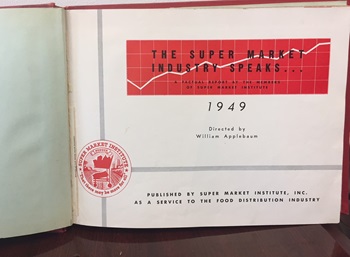 The first ever Food Retail Industry Speaks report appeared in 1949. Sixty eight years later, this report continues to provide the industry with important benchmarks, facts and figures that are used in our advocacy work on Capitol Hill, in conversations with the media and by our members desiring to make informed business decisions.
As we prepare to launch the 2018 Speaks survey, a visit through the FMI archives to review the 1949 report reveals some interesting findings:
- There were nearly 4,600 retail food stores (compared to more than 38,000 today*).
- Supermarket sales totaled just over $2 billion (compared to over $668 billion today*).
- The ideal store size was just under 12,000 square feet (compared to more than 41,000 square feet today).
- Annual sales gains were 20 percent, while food retail prices were rising at 8 percent (compared to little change today).
- One-half of companies offered employees health insurance plans (compared to a very different situation today)
- Around 8 percent of stores had installed this new concept called a Food-O-Mat (the evolution of convenience).
- Only 22 percent of stores had air conditioning (yes air conditioning, not WiFi).
Compared to 1949, the times are clearly changing as we march into 2018. Let’s take a look at the industry in the 2017 version of Speaks.
- There are universal concerns about the impact of competition from non-traditional food retailers and online sales, along with concerns in many other areas, as measured by the Worry Index.
- Key operational metrics include weekly transactions per store (13,117), average transaction size ($30), weekly sales per store ($397,000) and sales per labor hour ($137).
- Key financial benchmarks to compare to are same store sales (+1.0%) and detailed revenue and expense data leading to net income (+1.1%), down to details on shrink control (3.1% total store).
- Customer outreach and education efforts used by food retailers include loyalty programs (64%) and dietitians (44%) along with social media platforms like Facebook (98%) and Twitter (72%).
How do we know all of this about the food retail industry? Directly from the food industry, when your company responds to The Food Retailing Industry Speaks annual survey. As we prepare for 2018, we need your help in ensuring these data accurately reflects the breadth and depth of the food retail industry. Large or small, conventional or niche — we need your company’s participation if our voice is to be genuine and carry the authority of the whole industry. The survey will be distributed next week. Look for an email with more detailed instructions on how to participate.
Learn more and download the full 2017 Speaks report at FMI.org/GrocerySpeaks. For questions, email research@fmi.org.
*current data from Progressive Grocer Magazine
 Industry Topics address your specific area of expertise with resources, reports, events and more.
 Our Research covers consumer behavior and retail operation benchmarks so you can make informed business decisions.
 Events and Education including online and in-person help you advance your food retail career.
 Food Safety training, resources and guidance that help you create a company food safety culture.
 Government Affairs work — federal and state — on the latest food industry policy, regulatory and legislative issues.
 Get Involved. From industry awards to newsletters and committees, these resources help you take advantage of your membership.
 Best practices, guidance documents, infographics, signage and more for the food industry on the COVID-19 pandemic.
