

Younger shoppers are driving growth in
private brand products by valuing them not only for affordability but also for
quality, taste, and innovation, creating
opportunities for retailers to build loyalty with a growing segment of consumers.
By: Tom Cosgrove, Director, Industry Relations, FMI
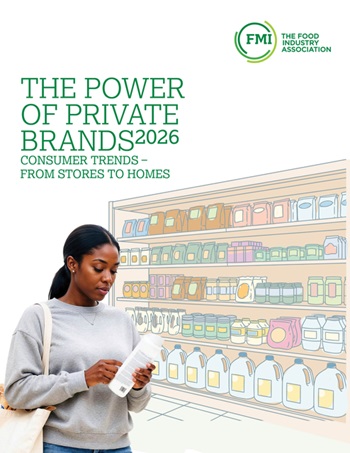 The latest Power of Private Brands 2026: Consumer Trends report highlights an important trend shaping the future of grocery retail: younger generations are leading the private brand movement and helping redefine what store brands mean to shoppers. Now more than ever, private brands are increasingly viewed as trusted, high-quality products that meet consumers’ needs for value, taste, convenience and innovation.
While private brands have broad appeal across all age groups, Gen Z and Millennials stand out as the most enthusiastic adopters. Nearly six in ten Gen Z shoppers (59%) and more than half of Millennials (52%) report purchasing more private brand products over the past year, compared with 49% of shoppers overall. Looking ahead, these younger consumers are also more optimistic about future purchases, with 53% of Gen Z and 50% of Millennials expecting to buy even more private brand products in the coming year.
What makes these findings particularly significant is that younger shoppers are embracing private brands for reasons that extend well beyond price. While value remains a leading motivator, perceptions of quality continue to improve. In fact, 76% of shoppers overall believe private brands offer the same quality as national brands, and many consumers describe them as reliable, high-quality, and even superior in some cases. Across the industry, taste, quality, and packaging have become increasingly important drivers of private brand purchases, demonstrating how retailers have successfully elevated their offerings in recent years.
Younger consumers are also more intentional in seeking out private brand products. For instance, Gen Z shoppers are more heavily influenced by digital channels, including YouTube, TikTok, and Instagram, and are much more likely than the average shopper to encounter private brands through media and social platforms. This creates new opportunities for retailers to connect with the next generation of consumers through digital storytelling, influencer partnerships, and omnichannel marketing strategies.
The growing popularity of private brands is important because these products are becoming a key factor in where consumers choose to shop. More than half of shoppers (56%) say their primary store’s private brand is very or extremely important in their decision to shop there. That importance rises to 60% among Gen Z shoppers and 61% among Millennials. The most telling statistic from Power of Private Brands 2026: Consumer Trends might be that even if grocery prices decline, 94% of shoppers say they are somewhat or very likely to continue purchasing private brands. Younger generations echo this sentiment, with virtually all Gen Z and Millennial consumers indicating they expect to continue relying on private brands regardless of future price changes. In an increasingly competitive retail environment, private brands serve as unique differentiators for retailers.
The message for food retailers is clear: private brands are no longer simply a value play. They have become an essential component of consumer trust, loyalty and store differentiation. As Gen Z and Millennials continue to increase their purchasing power, retailers that invest in high-quality private brands, compelling digital engagement, and innovative product offerings will be well positioned to capture the next generation of grocery shoppers. The future of private brands is not just about affordability; it’s about building lasting relationships with your customers that begin today and grow for years to come.
 Industry Topics address your specific area of expertise with resources, reports, events and more.
 Our Research covers consumer behavior and retail operation benchmarks so you can make informed business decisions.
 Events and Education including online and in-person help you advance your food retail career.
 Food Safety training, resources and guidance that help you create a company food safety culture.
 Government Affairs work — federal and state — on the latest food industry policy, regulatory and legislative issues.
 Get Involved. From industry awards to newsletters and committees, these resources help you take advantage of your membership.
 Best practices, guidance documents, infographics, signage and more for the food industry on the COVID-19 pandemic.
