
Every shopper follows a unique grocery map, blending stores, channels and online options to create a personalized path to put food on the table in today's increasingly omnichannel food retail landscape.
By: Morgan Griffin, Manager, Communications, FMI
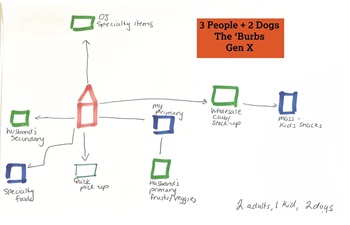 Ask a shopper where they buy groceries and you might expect a simple answer: a favorite store down the road, a quick stop on the way home, maybe an occasional warehouse trip. Instead, many shoppers draw maps.
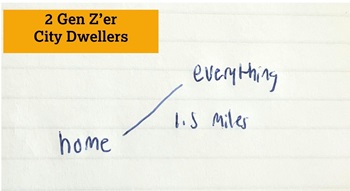
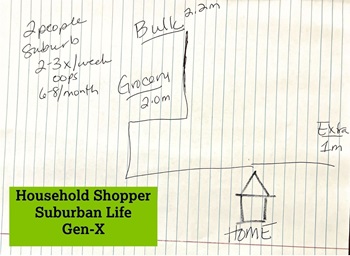
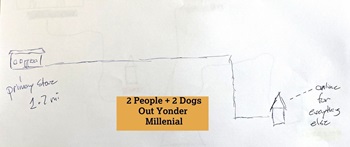
One map might begin in a city apartment. The primary store sits just a short walk away, while a trip for specialty ingredients follows a different route entirely. Another might start in the suburbs, where a family passes multiple stores before reaching the location they trust for their weekly stock-up. A third could stretch across a rural landscape, where the nearest grocery store may be miles from home and online shopping fills gaps between visits.
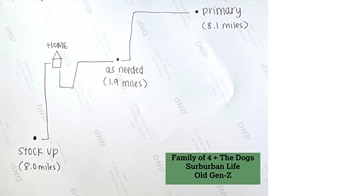 As part of the 2026 U.S. Grocery Shopper Trends research, FMI asked shoppers to sketch where their primary store, stock-up store and ingredient store are in relation to their home. The exercise revealed what the data throughout the report makes clear: today's shoppers do not follow a single path to put food on the table.
In many ways, grocery shopping has become a network instead of a destination. The average shopper now visits 5.4 different banners in a month and shops across 3.8 retail channels. Younger shoppers move across an even broader retail landscape. Gen Z shoppers visit an average of 6.7 banners each month while millennials visit 6.1. Many shoppers routinely combine supermarkets, mass retailers, club stores, specialty channels and online options to meet different needs.
 That behavior helps explain a central enigma uncovered in the research. Grocery shoppers consistently report a desire for convenience, yet they continue to shop at multiple retailers both in person and online. They are not necessarily looking for one store to do everything, but rather for convenience across their ecosystem of stores, each serving a different purpose.
The maps also illustrate a significant shift in the competitive landscape. Today, mass retailers and supermarkets stand on equal footing as shoppers' primary grocery destination, with 37% naming a mass retailer and 36% naming a supermarket as their primary store. Yet location alone does not determine where shoppers spend their food dollars. Two-thirds of shoppers bypass a closer store to reach a primary food retailer that better delivers on value, quality, selection or convenience.
 Digital commerce adds another layer to the picture. Seventy-two percent of shoppers now buy groceries online at least occasionally. Yet online rarely replaces the physical store. Instead, shoppers blend channels based on the task at hand. In fact, 88% of online shoppers report using different primary stores for online and in-person shopping.
Hand-drawn maps from the study make these trends tangible. They show that every household creates its own grocery geography shaped by budget, household size, generation, lifestyle and shopping goals. Some routes are short. Others stretch across a city, suburb or rural community. Some include just one store. Some include several. Increasingly, some include a screen.
 For food retailers and suppliers, that may be the most important lesson of all. “One stop shopping” isn’t the norm, and shoppers are building a system that supports them. The food retailers that understand how they fit into that system will be the ones that earn a place on the shopper's map.
 Industry Topics address your specific area of expertise with resources, reports, events and more.
 Our Research covers consumer behavior and retail operation benchmarks so you can make informed business decisions.
 Events and Education including online and in-person help you advance your food retail career.
 Food Safety training, resources and guidance that help you create a company food safety culture.
 Government Affairs work — federal and state — on the latest food industry policy, regulatory and legislative issues.
 Get Involved. From industry awards to newsletters and committees, these resources help you take advantage of your membership.
 Best practices, guidance documents, infographics, signage and more for the food industry on the COVID-19 pandemic.
