

Holiday grocery shopper trends reflect a balance between consumer concern over food price inflation and a commitment to preserving traditional holiday meals.
By Steve Markenson, Vice President, Research & Insights, FMI
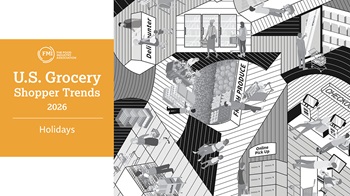 As we head into the holiday season, Americans are balancing two seemingly contradictory realities: continued concern about food prices (and prices in general) and a determination to preserve the meals and traditions that make the holidays meaningful.
FMI’s latest U.S. Grocery Shopper Trends: Holidays research finds that 45% of holiday celebrants are extremely or very concerned about rising holiday food prices, an eight-percentage-point increase from 2025. Yet when consumers are forced to make trade-offs, the holiday meal appears remarkably resilient. Shoppers are more willing to cut spending on clothing, decor, entertainment and other expenses than on holiday food.
That makes sense when we consider what food represents to Americans during the holidays. Sixty-seven percent of shoppers say fun, harmonious time with family and friends defines a successful holiday, while 52% point to a great homemade feast. Food is not simply another expense. It is one of the ways consumers create the connection and traditions they value most.
Why Consumers Are Increasing Home Meal Preparation for Thanksgiving
This desire to preserve traditions which include communal cooking is especially evident at Thanksgiving. Among shoppers whose meals contain at least some homemade food, 95% plan to participate in meal preparation. Turkey remains the centerpiece for 68% of those celebrating Thanksgiving, followed closely by mashed potatoes at 63% and stuffing at 62%.
But one finding clearly stands out this year: 59% of those planning to serve turkey expect to prepare it from scratch at home, up 16 percentage points from 2025. Meanwhile, the share planning to purchase freshly prepared turkey dropped to 19%. Similar shifts toward home preparation appear for other traditionally Thanksgiving foods.
How Food Retailers Can Provide Value Beyond Price Discounts
Consumers are not ignoring their budgets. Sixty-five percent remain extremely or very concerned about rising grocery prices, but shoppers now more than ever feel they have their grocery spending under control, at 88%. While 62% say their income has not kept pace with food-price inflation, 72% describe themselves as doing fine financially or living comfortably.
For food retailers, this creates an opportunity to deliver value that goes beyond just the price. Thanksgiving shoppers say retailers can help through member discounts, holiday meal and dish displays, freshly prepared options, samples and tastings, recipes and a festive store environment.
Shoppers continue to enjoy shopping and give their stores strong ratings for helping them meet their needs, with loyalty programs playing a key supporting role. The U.S. Grocery Shopper Sentiment Index is near its historical high at 72 this fall, supported by continued strong enjoyment of grocery shopping and primary store ratings, especially from those who see value in saving with the store’s loyalty program.
Technology could play a growing role, too. With growing use of artificial intelligence, 65% of shoppers say they would like to use AI in some aspect of holiday meal planning, from finding recipes and festive ideas to planning menus, managing cooking schedules and learning new kitchen skills.
The message for food retailers is clear: consumers may be watching every dollar, but they are reluctant to sacrifice the experiences that make the holidays special. Helping shoppers achieve the holiday they want, with less financial pressure and less preparation stress, could be one of the most meaningful forms of value retailers deliver this holiday season.
 Industry Topics address your specific area of expertise with resources, reports, events and more.
 Our Research covers consumer behavior and retail operation benchmarks so you can make informed business decisions.
 Events and Education including online and in-person help you advance your food retail career.
 Food Safety training, resources and guidance that help you create a company food safety culture.
 Government Affairs work — federal and state — on the latest food industry policy, regulatory and legislative issues.
 Get Involved. From industry awards to newsletters and committees, these resources help you take advantage of your membership.
 Best practices, guidance documents, infographics, signage and more for the food industry on the COVID-19 pandemic.
