
FMI’s new retail media framework provides the food industry with a standardized way to demonstrate what is working and what is not.
By: Mark Baum, Chief Collaboration Officer & Senior Vice President, Industry Relations, FMI
 Retail media has moved from a side experiment to a permanent line in food retailers' and product suppliers’ budgets. The metrics that justify those budgets haven’t kept up. CFOs are right to ask harder questions, and the brands and retail media networks trying to answer them are too often comparing numbers that mean different things.
FMI’s new publication, U.S. Retail Media Measurement Standards and Glossary, produced with contributions from NIQ and ThinkBlue, gives the industry a shared baseline. It tackles five common roadblocks:
- Lack of agreement on what “the ad caused this sale” means.
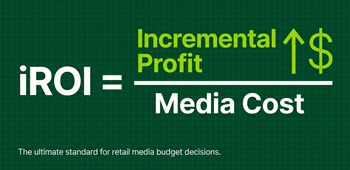
- Confusion between Return on Ad Spend (ROAS), Incremental Return on Ad Spend (iROAS) and Incremental Return on Investment (iROI).
- Reports that come back too slowly to act on.
- Weak measurement of in-store and across channels.
- Dashboards full of data that finance teams cannot use.
I think Drew Debbelt with NIQ said it well, “Brands and retailers have been comparing apples to oranges for too long. Standardizing how we define retail media measurement gives the industry a shared baseline, so investment decisions can be made with confidence rather than caveats.”
The framework has three major benefits: standardization, transparency and omnichannel reporting. Here’s how:
Standardization
The framework provides common KPI definitions and universal business practices that are comparable across food retailers and networks. Without these standard measurement layers, it's easy for brands and retail media networks to inflate results by quietly counting sales that the ad placement probably didn't cause. This framework sets a level playing field for retail media.
Transparency
The framework requires secure data-sharing setups, scrambled customer IDs, filters to block fake traffic and real profit numbers from finance to ensure transparency. The rules force transparency about which sales are being claimed and which are being counted under a looser definition.
Omnichannel Reporting
The framework guides one standard across every channel. The same measurement rules apply no matter where the ad runs, creating consistent omnichannel reporting.
We invite you to download the report, read it and offer us feedback as we aim to support the food industry in maturing retail media together.
Download U.S. Retail Media Measurement Standards and Glossary
 Industry Topics address your specific area of expertise with resources, reports, events and more.
 Our Research covers consumer behavior and retail operation benchmarks so you can make informed business decisions.
 Events and Education including online and in-person help you advance your food retail career.
 Food Safety training, resources and guidance that help you create a company food safety culture.
 Government Affairs work — federal and state — on the latest food industry policy, regulatory and legislative issues.
 Get Involved. From industry awards to newsletters and committees, these resources help you take advantage of your membership.
 Best practices, guidance documents, infographics, signage and more for the food industry on the COVID-19 pandemic.
