The 2026 State of Technology report shows that technology investment is no longer the differentiator. Organizational readiness is.
By: Jennifer Shawgo, Senior Director, Technology Strategy & Programs, FMI
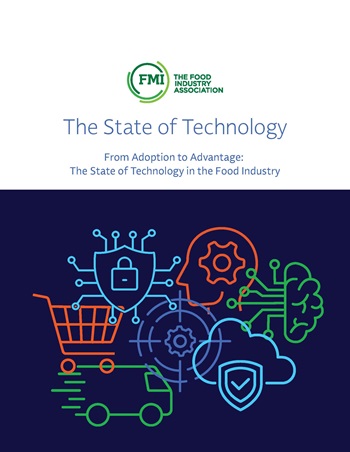 Technology adoption across the retail food industry is accelerating. But as this year’s 2026 State of Technology report makes clear, the more important question is no longer whether organizations are investing in technology but rather whether they’re prepared to turn those investments into measurable business value.
The tension between the industry’s demonstrated ability to adopt technology and its continued struggle to build the organizational infrastructure required to make it work, particularly in the areas of trusted data, integrated systems, clear governance, aligned teams and effective change management, became the throughline connecting the report’s key findings. It also dominated many of the discussions I’ve had over the past several months with technology leaders, operators and partners across the FMI membership.
Our annual technology report brings together findings from FMI’s proprietary 2026 research to examine four questions that matter most right now:
- Where is the industry investing, and what value is it seeing?
- Are the data, infrastructure, and security foundations ready for what’s next?
- How is technology reshaping operations and the workforce?
- How are evolving technologies changing shopper relationships and the commercial systems built around them?
Retailers continue to show strong momentum behind technology investment, with the majority planning to increase spending again this year. At the same time, while core technologies have largely moved into the mainstream, the bigger challenge may be what happens after the investment is made, particularly when fewer than one-third of food retailers report having a defined change-management plan for the technologies they are deploying, including AI.
As noted above, the industry has proven it can adopt technology. What’s far less clear is what will be required to achieve team alignment around proper governance, integration, and organization. In fact, the most interesting conversations weren’t ultimately about what new technology can do but instead on the more consequential question of what has to change inside our businesses for it to work?
The answer starts with organizational readiness: clear data ownership, workflows redesigned around new tools rather than bolted onto existing models, cross-functional alignment, and change management that moves both top-down and bottom-up. Just as important is building operating models capable of scaling as quickly as technology itself evolves.
That may sound like a lot to tackle. It is. But the takeaway from this year’s research isn’t that organizations need to solve everything at once.
Instead, identify one signal, one business need, and one next action. Then ask: What outcome are we actually solving for? Who owns the work? What data does it require, and do we trust it? What behaviors need to change for shoppers, associates, and our own teams? And how will we know it worked?
We hope the 2026 State of Technology report becomes a useful reference point for your internal teams throughout the year ahead. And through FMI’s technology committees, councils, peer discussions and programming, we look forward to helping turn those insights into action.
 Industry Topics address your specific area of expertise with resources, reports, events and more.
 Our Research covers consumer behavior and retail operation benchmarks so you can make informed business decisions.
 Events and Education including online and in-person help you advance your food retail career.
 Food Safety training, resources and guidance that help you create a company food safety culture.
 Government Affairs work — federal and state — on the latest food industry policy, regulatory and legislative issues.
 Get Involved. From industry awards to newsletters and committees, these resources help you take advantage of your membership.
 Best practices, guidance documents, infographics, signage and more for the food industry on the COVID-19 pandemic.
