
Flat August grocery inflation offers consumers near-term relief, but rising energy, transportation and storage costs, trade uncertainty and tighter corn markets could push food-price growth higher in the months ahead.
By Andy Harig, Vice President, Tax, Trade, Sustainability and Policy Development, FMI
Food-at-home inflation was flat in August, but pressures building earlier in the supply chain suggest grocery prices may not remain steady. I recently spoke with Dr. Ricky Volpe about what the latest Consumer Price Index (CPI) and Producer Price Index (PPI) reveal, how trade supports year-round food availability and why field corn is one of the most useful indicators of where retail food prices may be headed.
Andy Harig: The latest CPI offered some relief for grocery shoppers. What is the headline takeaway?
Ricky Volpe: The August report showed food-at-home prices were effectively flat from July, while the year-over-year rate slowed to 2.2% from 2.7%. That is welcome news, especially when overall inflation rose 0.4% for the month and 3.4% over the year. But a flat average masks substantial variation across the supermarket. Fruit and vegetable prices declined and helped pull the overall number down, while poultry, dairy, fats, oils, butter and other categories increased. Depending on what was in a shopper’s basket, the month may not have felt flat at all.
Harig: CPI reflects what consumers pay, but are there some warning signs in the Producer Price Index we should pay attention to?
Volpe: PPI measures upstream costs facing producers and businesses, so it can provide an early warning of pressures that may later reach the shelf. The August PPI showed sizable increases in crude oil, diesel, industrial electricity, warehousing, cold storage and trucking. Those are foundational costs across the food supply chain. Higher transportation expenses can reach retailers within weeks; higher storage, manufacturing and agricultural costs take longer. Even if energy prices stabilize, the effects already moving through the system can persist for several months.
Harig: Earlier this year, energy costs jumped and then eased. Why might this episode be different?
Volpe: Earlier increases were volatile and not always sustained. This time, I am concerned we may be seeing a directional change rather than a short-lived spike. Energy may represent only about three to four percent of the retail food dollar, but its influence compounds. Farms use energy; manufacturers pay both higher energy and commodity costs; and distributors absorb higher fuel, refrigeration and storage expenses. Unless the next PPI shows a sharp reversal, I expect those pressures to contribute to higher-than-average inflation across many categories through the remainder of the year—not a return to post-pandemic peaks, but a noticeable acceleration.
Harig: Tariffs have drawn a lot of attention from the press, raising awareness of the role of imports in our food supply. Where does international trade fit into the food-price picture?
Volpe: Trade is essential to the availability, variety and affordability consumers expect. Nearly 40% of U.S. agricultural imports come from Canada and Mexico. In 2025, U.S. agricultural imports totaled $43.9 billion from Mexico and $40.8 billion from Canada. Mexico is especially important for filling seasonal gaps in fresh produce, while Canada supplies products such as oats and oils as well as packaging inputs including paper and aluminum. The USMCA provides the rules that support these deeply integrated supply chains. Tariffs or border disruptions can raise costs directly and can also reduce flexibility when weather, disease or other shocks affect domestic production.
Harig: Canadian tariffs recently took effect on some U.S. food exports. Should shoppers be concerned?
Volpe: The immediate scope is limited—about 5% of U.S. exports to Canada—but the direction matters. The affected products include dairy, molasses, and baking and dough kits. A narrow action does not necessarily translate into a broad retail price increase. The larger risk is escalation: additional tariffs, retaliation or administrative friction could make sourcing more expensive and less predictable. In an industry already managing thin margins and elevated operating costs, trade uncertainty becomes another pressure point to monitor. Trade disruptions with Canada also may affect key packaging inputs for the food system, like aluminum and cardboard.
Harig: Switching gears to the future - you have called field corn a leading indicator for food prices. Why is it so important?
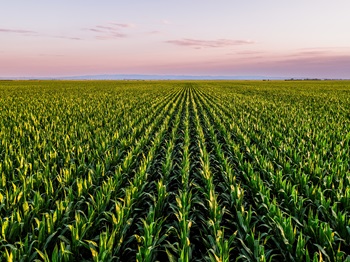
Volpe: Field corn is directly or indirectly connected to at least three-quarters of supermarket products. It becomes animal feed, sweeteners, preservatives, meal and flour, and it is linked to energy through ethanol. That makes corn futures, the corn PPI and USDA corn reports valuable signals for the next six to 18 months. Fertilizer disruptions and higher input costs earlier this year affected planting economics. Current expectations point to lower yields and stocks and somewhat higher corn prices. The movement is not dramatic, but it matters because corn touches so many categories.
Harig: There is a time-lag between these PPI changes and when it impacts retail. Why can it take so long for a higher corn price to appear on a grocery receipt?
Ricky Volpe: Corn must be harvested, processed, stored, transported and incorporated into manufactured ingredients before it reaches a finished product. Contracts, inventories, packaging and production schedules add more delays. For a product such as corn chips, the lag between an increase in the corn PPI and the retail price could be six, nine or even 12 months. Corn also does not operate in isolation. Labor, trucking, energy, weather, inventories and demand may reinforce or offset its effect. That is why food inflation rarely has a clean start date or a single cause.
Harig: Headlines and coverage of food prices have been all over the place and in some cases generated confusion. Let’s close by offering readers some guidance - what should consumers and the food industry watch next?
Volpe: Watch whether energy-related PPIs remain elevated, whether corn forecasts continue to tighten and whether trade frictions expand. The USDA food-price outlook midpoint is 2.5% for the year, roughly the historical average. Given the current cost and margin pressures, however, it would not surprise me if annual food inflation finished closer to 2.7% to 2.9%. The key point is not that a dramatic surge is inevitable. It is that today’s flat CPI should not be read as the end of the story. Upstream pressures take time to reach consumers, and several are now moving in the same direction.
 Industry Topics address your specific area of expertise with resources, reports, events and more.
 Our Research covers consumer behavior and retail operation benchmarks so you can make informed business decisions.
 Events and Education including online and in-person help you advance your food retail career.
 Food Safety training, resources and guidance that help you create a company food safety culture.
 Government Affairs work — federal and state — on the latest food industry policy, regulatory and legislative issues.
 Get Involved. From industry awards to newsletters and committees, these resources help you take advantage of your membership.
 Best practices, guidance documents, infographics, signage and more for the food industry on the COVID-19 pandemic.
