

By Leslie G. Sarasin, President & CEO, FMI
 Every year, our U.S. Grocery Shopper Trends report focuses on a question that is worthy of our consideration. For our 2026 report, we decided, with input from FMI members, to concentrate on the in-store experience—Why do shoppers still go to the grocery store? What benefits does shopping in-person offer? What attracts them to certain stores? What would shoppers miss if they could shop only online?
What we found is that the grocery store's personality still has a major impact on shoppers and the grocery shopping experience.
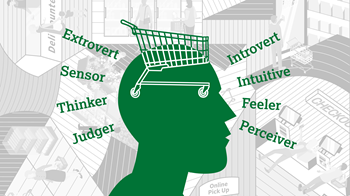
When trying to give voice to varying personalities and the shapes they take, I immediately think of the Myers-Briggs Type Indicator (MBTI). This popular tool bears the name of the mother-daughter team responsible for taking categories imagined by Carl Jung and creating the personality-sorting questions around them. The survey provides a vocabulary to talk about personality and is one of the most widely used tools for helping people understand themselves, based on four preferences: Extraversion/Introversion, Sensing/Intuition, Thinking/Feeling, and Judging/Perceiving.
Just as each human being has his or her individual preferences and a unique blend of these qualities, supermarkets also have a personality, a certain disposition, to them. For example, using the MBTI categories:
Introvert
An introvert's store has a highly organized boutique vibe to it. It prioritizes efficiency, low stimulation, and minimal social interaction by being structured, quiet, and streamlined to reduce the need for unwanted external interactions. Staff are trained in low-impact customer service, and self-checkout is a must. Shoppers leave an introvert store calm, having made their food purchases with only invited interactions and exchanges that fueled their inner life.
Extrovert
An extrovert store is about creating a social experience. The store is a hub of interaction with both friendly, engaging staff and exciting, culinary products that create an almost theatrical experience for the senses. It has interaction hubs throughout for unexpected pop-up gatherings and space for impromptu shopping cart bump-ins. Shoppers leave an extroverted oriented store inspired and energized by what they discovered and those with whom they engaged.
Sensing
A sensate store plays to all five senses and leaves no sight, sound, taste, touch, or smell opportunity unexplored. The store layout is vibrant with slow-tempo music inviting the shopper to stop and smell the roses or the coffee or the bread, while offering periodic chances to sample, select, and engage with products. Displays are colorful and invite participation. Shoppers leave the sensing store tantalized, with senses stimulated, calm, and satisfied.
Intuition
An intuitive’s store plays to shoppers' gut feelings and emotional connections with an open, flowing, less-traditional layout and food shelving according to mood or benefit (think Heart Healthy, or Energy Boosters). Calming background music would contribute to a sanctuary vibe, and soft, positive marketing tells the story behind the store, the product and the brand. Shoppers leave an intuitive store with boosted energy from having their inner esoteric guide to vibrant, nourishing food purchases substantiated.
Thinker
A thinker-suited store has a conducive corner that minimizes distractions and allows space for clear data gathering. There are aisles of inquiry with in-depth product information, paired with staff-selected products to pique curiosity and engage deliberation. Product arrangement and shelf tags should invite tranquil focus and spur cognitive consideration. There are moveable fixtures allowing the store to adapt to incoming knowledge, reflecting the ever-evolving nature of the thinking mind. Shoppers leave a thinker store having learned something new, synthesized a new mental model regarding food, and discovered a treasure.
Feeler
A feeler’s store would showcase an emotional connection vibe designed to nourish, comfort, and engage. A garden/flower display-entry with the bakery nearby, and warm lighting, an ambient, tranquil soundscape, and a focus on fresh and local artisanal products contribute to an artistic ambiance. Different sections feel like small, specialized boutiques, developing the sense of a meandering market rather than straight aisles in a warehouse. Benches, a small café, and a community bulletin board create opportunities for personal connection. Staff are trained to be openly engaging. Shoppers leave a feeler store with the sense of having had a comfortable personal experience rather than having just tackled a chore.
Judger
A judger store is structured and orderly, prioritizing efficiency and accommodating those who come with a list and a mission. Set up like a high-efficiency logistics center, items are stocked and shelved logically, labels are readable, and lighting is set for maximum visibility. Checkouts maximize technological efficiency, and 10-item or fewer lanes are a must. It provides a reliable and consistent shopping experience that is clean and minimalist. Shoppers leave a judger store feeling satisfied that they maximized their time, minimized their decision-making, and accomplished a 30-minute task in 15 minutes or less.
Perceiver
A perceiver store caters to the penchant for spontaneity, and offers spontaneity, adaptability, and exploration. Offering a “playground” vibe, the layout inspires discovery, features pop-up surprises, and offers a new way to engage with the familiar. Products might be grouped by experience, theme, or season, inviting new culinary adventures and connections. Shoppers leave a perceiver store rewarded, feeling it was an adventurous, good time exploring the food world, even if it took longer than anticipated.
What does this mean for food retailers and suppliers? In short, it means that food retail is a craft of solid business acumen coupled with the art of knowing the personality of your audience. None of us is purely any one of the above, and we each have a preference for a particular set of four. To further complicate matters, we have distinct preferences but also possess a minority voice of other elements that may surface depending on circumstances.
So, the key is to create a grocery store personality that plays to your particular character strengths but contains elements that may appeal to multiple personality types. Build on the core qualities of your specific store personality but always keep an eye open to the needs (and requests) of customers with a different set of preferences.
For key research and insights to support your stores’ personality development, I encourage you to download FMI’s 2026 U.S. Grocery Shopper Trends report and dig into the focus area of the consumer’s in-store experience with us.
 Industry Topics address your specific area of expertise with resources, reports, events and more.
 Our Research covers consumer behavior and retail operation benchmarks so you can make informed business decisions.
 Events and Education including online and in-person help you advance your food retail career.
 Food Safety training, resources and guidance that help you create a company food safety culture.
 Government Affairs work — federal and state — on the latest food industry policy, regulatory and legislative issues.
 Get Involved. From industry awards to newsletters and committees, these resources help you take advantage of your membership.
 Best practices, guidance documents, infographics, signage and more for the food industry on the COVID-19 pandemic.
