Apr 9, 20263 min read
Nonfoods are a $310 billion market built on routine and loyal purchasing behavior, and the only thing standing between grocery retailers and a bigger share of it is a fixable perception problem.
By: Doug Baker, Vice President, Industry Relations, FMI
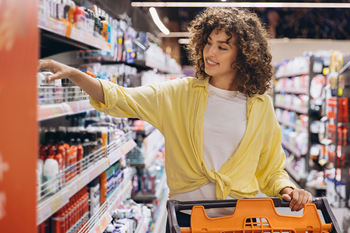 Every week, grocery shoppers walk past hundreds of nonfood items on their way to the dairy case. Cleaning products. Vitamins. Pet food. Shampoo. Razors. Most retailers know those aisles exist. Fewer treat them as the opportunity for basket growth that they represent.
FMI's "The Power of Nonfoods at Retail 2026," produced with data support from Circana, makes the case plainly. Total nonedible sales across U.S. multi-outlet retail reached $310 billion, up 1.8 percent year over year. That's $5.6 billion in new dollars, generated even as unit demand softened and consumers tightened their belts.
Where the growth actually came from
Not every department performed equally. Beauty led the way at +4.5 percent in dollars. Health came in at +2.2 percent. Pet Care grew +1.9 percent. Home Care added +1.6 percent.
At the aisle level, the standouts are even more instructive:
- Fragrance jumped 16.3 percent.
- Nutrition and weight loss posted 8.8 percent increase in dollars, a solid performance.
- Personal cleansing ran up 6.3 percent.
- Skin care grew 5.1 percent.
Shoppers are telling us what they want
The research surveyed a nationally representative sample of 2,100 grocery shoppers across 12 nonfood categories, asking how often they buy, where they buy and why. A few findings stood out immediately.
Purchase frequency is high. Pet food buyers shop the category weekly (35 percent) or monthly (52 percent), according to the report. Household cleaning products are purchased by 81 percent of shoppers, the highest penetration of any category surveyed. Vitamins are bought by 66 percent of respondents. These are not occasional purchases. They are routine.
And these purchases are overwhelmingly planned. Across nearly every category, the majority of shoppers arrive at the store intending to buy. Pet food runs 79 percent planned. Mouth care hits 75 percent. Vitamins reach 76 percent. These planned purchases are an opportunity for grocery retailers.
The problem grocers cannot afford to ignore
Here is where it gets uncomfortable. When shoppers skip the grocery channel for nonfoods, cost is the reason they cite most often. Not inconvenience. Not selection, though that comes up too. Cost and affordability dominate the "why not grocery" responses across every single category in the study.
That is not an assortment problem. It is a perception problem, and perception problems can be solved.
The data is clear: Nonfoods represent serious, recurring revenue, and grocery retailers are leaving a meaningful share of it on the shelf. Parts 2 and 3 of this series will show exactly where the opportunity is sharpest, and what it takes to capture it.
"The Power of Nonfoods at Retail 2026” is available for download at no cost, with the complete data, category breakdowns and detailed charts.
 Industry Topics address your specific area of expertise with resources, reports, events and more.
 Our Research covers consumer behavior and retail operation benchmarks so you can make informed business decisions.
 Events and Education including online and in-person help you advance your food retail career.
 Food Safety training, resources and guidance that help you create a company food safety culture.
 Government Affairs work — federal and state — on the latest food industry policy, regulatory and legislative issues.
 Get Involved. From industry awards to newsletters and committees, these resources help you take advantage of your membership.
 Best practices, guidance documents, infographics, signage and more for the food industry on the COVID-19 pandemic.
