

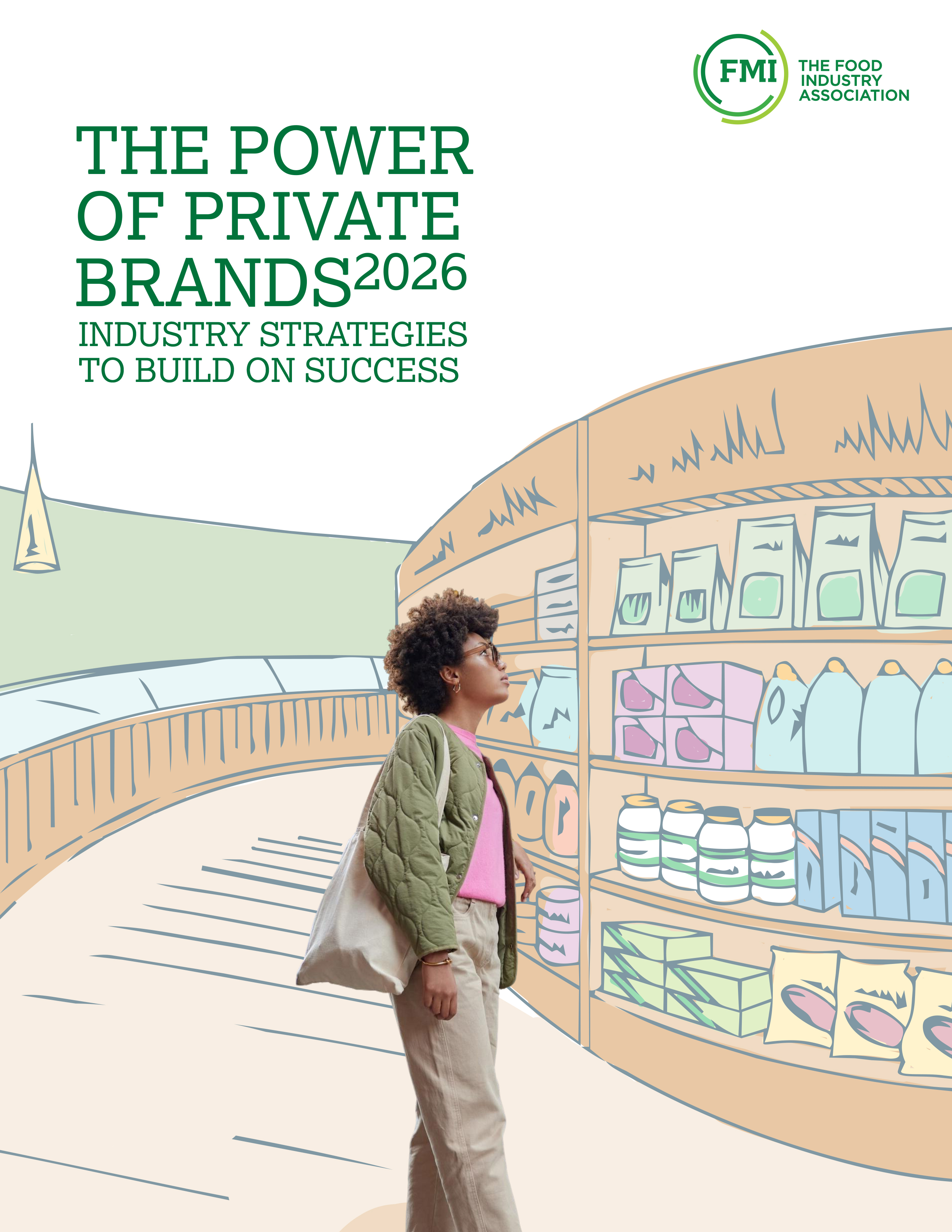
Private brands are evolving beyond value as retailers increase investment in innovation and marketing to strengthen differentiation, reach younger shoppers and drive long-term growth.
By: Tom Cosgrove, Director, Industry Relations, FMI
 Value may have been the starting point for private brands, but it is no longer the whole story. Today, they are becoming an increasingly important part of broader business strategies. Our latest Power of Private Brands 2026: Industry Strategies to Build on Success research found that nearly 90% of private brand companies plan to moderately or significantly increase their private brand investments over the next two years. “Investment,” however, can mean different things from one company to another: from product development and sourcing to technology, packaging, ecommerce, marketing or other capabilities. The more meaningful takeaway is that FMI members are thinking positively about private brands and including them among their strategic priorities for future growth and differentiation.
That positive outlook reflects how far private brands have come. Consumer acceptance has reached new heights. Private brand products are now found in more than 90% of grocery shoppers’ homes, while dollar sales and unit sales continue to outpace national brands. Awareness is nearly universal, with 93% of shoppers recognizing private brands at their primary grocery store.
As private brands become a larger part of retailers’ growth strategies, companies are directing attention and resources toward areas such as product innovation, ecommerce, packaging, artificial intelligence and marketing. The mix will vary by company, but the shared focus matters because the reasons consumers buy private brands are changing.
Price and value remain critical, but they no longer tell the whole story. FMI consumer research, Power of Private Brands 2026: Consumer Trends, shows shoppers increasingly cite quality, taste and packaging as reasons for choosing private brands. Taste has grown significantly as a purchase driver over the past several years, while quality and appealing packaging have also gained ground.
That shift creates a powerful opportunity for retailers. The conversation can move beyond affordability and focus on what makes private brands distinctive. Whether it’s premium offerings, health-focused products, cleaner ingredients or unique flavor profiles, today's private brands have more compelling stories to tell.
Not surprisingly, retailers are responding by expanding their promotional efforts. Social media has become the most widely used private brand marketing tactic, followed by in-store signage, circulars and display programs. More than one-third of respondents are also leveraging retail media networks to support private brand growth. At the same time, retailers report that many of these same tactics rank among their most effective promotional tools.
Marketing is also taking on greater importance as companies look to connect with younger consumers. Gen Z and Millennials are among the most enthusiastic private brand shoppers, with higher rates of purchase growth than the overall population. These consumers are digitally engaged, highly influenced by discovery and increasingly looking for brands that align with their lifestyles and values.
The private brands industry has spent years building stronger products, improving quality and expanding assortments. Now, many companies are matching those efforts with greater marketing support.
That combination may be the most important investment of all. After all, successful private brands are no longer just competing on price. They are competing on preference. And when retailers invest in telling that story, they create opportunities to strengthen shopper loyalty, differentiate their business and accelerate growth for years to come.
 Industry Topics address your specific area of expertise with resources, reports, events and more.
 Our Research covers consumer behavior and retail operation benchmarks so you can make informed business decisions.
 Events and Education including online and in-person help you advance your food retail career.
 Food Safety training, resources and guidance that help you create a company food safety culture.
 Government Affairs work — federal and state — on the latest food industry policy, regulatory and legislative issues.
 Get Involved. From industry awards to newsletters and committees, these resources help you take advantage of your membership.
 Best practices, guidance documents, infographics, signage and more for the food industry on the COVID-19 pandemic.
