
Origins:
Background and Commitment SPAR Group officially became a signatory of the South African Food Loss and Waste Initiative (FLWI) in 2020, demonstrating its commitment to supporting national efforts aimed at preventing and reducing food loss and waste. This commitment reflects SPAR’s recognition that food waste is not only an environmental concern, but also a significant social and economic issue that affects communities, households, businesses and the broader food system. Our Role and Impact As one of the country’s largest food retailers, SPAR recognises its strategic responsibility to help reduce poverty, limit avoidable food waste and support more sustainable food systems across its operations. Given the scale of its national footprint, SPAR is well positioned to make a meaningful contribution by strengthening food waste prevention practices within its own business, while also encouraging greater awareness and action across the wider value chain. In a country marked by significant inequality, this initiative plays an important role in supporting efforts to reduce hunger and improve food security. Alignment with SPAR’s Sustainability Strategy The project aligns with SPAR’s broader sustainability strategy, which focuses on: Contribution to Global Goals Through its participation in the FLWI, SPAR aims to strengthen its sustainability efforts, improve food waste management, and contribute to the broader global goal of halving food waste and reducing poverty by 2030, in line with the United Nations Sustainable Development Goals.
Contribution:
Our operations face challenges with surplus food that may expire in warehouses or on shelves and ultimately end up in landfills. This creates environmental concerns while also highlighting social and economic challenges in a country where many households experience hunger. Challenges include short shelf-life products, promotional overstocking, inaccurate forecasting, damaged packaging, supply-chain delays and seasonal changes in demand. This initiative focuses on how SPAR uses food rescue and recovery interventions to redistribute surplus food that remains safe for human consumption. These initiatives help address hunger in the communities we serve while supporting SPAR’s commitment to reducing food waste and working towards zero food waste to landfill. SPAR partnering with FoodForward SA (FFSA) has strengthened the collection coordination, traceability and compliance of all food items we donate. FFSA’s national beneficiary network, food safety protocols and regular beneficiary audits made it a suitable redistribution partner aligned with SPAR’s operational and sustainability goals.
Objectives:
Impact:
Since 2022, SPAR has partnered with FoodForward SA (FFSA) to redirect 612.2 tonnes of surplus food generated at distribution centres away from landfill and into communities where it is needed most. This initiative has delivered significant environmental and social benefits. By preventing food loss and waste from entering landfill, SPAR has avoided approximately 1,531 tonnes of CO₂e greenhouse gas emissions and prevented the release of 21 tonnes of methane, a highly potent greenhouse gas. In addition, the programme has conserved an estimated 790 million litres of embedded water that would otherwise have been wasted in the production of discarded food. Beyond the environmental impact, the food recovered through this partnership has provided the equivalent of 2.45 million meals to vulnerable individuals and families. These results demonstrate how responsible surplus food management can create meaningful value by reducing environmental impact, conserving resources, and supporting more sustainable and resilient communities.
Quote:
As a food wholesaler and distributor supporting a network of independent retailers, SPAR is well-placed to make a meaningful contribution to South Africans facing socio-economic hardship. Its independent retailers are rooted in their communities, acting as employers, sponsors and often as first responders in times of need. Together with SPAR’s bulk buying, distribution and supply chain capabilities, this network gives SPAR significant reach into areas most affected by food insecurity. Included amongst South Africa’s most pressing challenges is food insecurity; SPAR recognises its responsibility to use resources and community relationships to help address it. Through targeted initiatives, partnerships, and practical support, we aim to reduce poverty and improve access to food for vulnerable communities. This commitment aligns with United Nations Sustainable Development Goal 1, which calls for decisive action to end poverty in all its forms. SPAR remains committed to building resilient communities and supporting sustainable, and measurable social impact.
Support Statement:
FoodForward SA is proud to partner with SPAR in a shared commitment to building a food-secure and sustainable South Africa. Through SPAR’s donation of safe, surplus food, 2,171 beneficiary organisations countrywide provide nutritious food to vulnerable people. This collaboration reflects a circular food-system in action—recovering quality edible surplus that would otherwise go to landfills and redirecting it to communities where it is needed most. Key UN Sustainable Development Goals, including Zero Hunger, Responsible Consumption and Production and Climate Action are addressed.
 Industry Topics address your specific area of expertise with resources, reports, events and more.
 Our Research covers consumer behavior and retail operation benchmarks so you can make informed business decisions.
 Events and Education including online and in-person help you advance your food retail career.
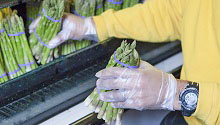 Food Safety training, resources and guidance that help you create a company food safety culture.
 Government Affairs work — federal and state — on the latest food industry policy, regulatory and legislative issues.
 Get Involved. From industry awards to newsletters and committees, these resources help you take advantage of your membership.
 Best practices, guidance documents, infographics, signage and more for the food industry on the COVID-19 pandemic.
