New Consumer Study Shows Nine-in-10 Shoppers Buy Store Brands with Younger and Health-Conscious Buyers Projected to Fuel Future Growth
Arlington, VA – Private brand products, also known as store brands, have become a fixture in American homes, as shoppers deepen their trust in them, according to new consumer research released today by FMI – The Food Industry 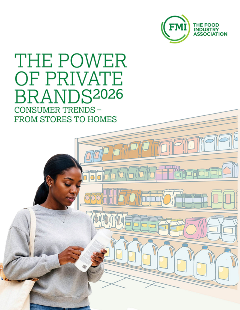 Association. The annual Power of Private Brands 2026: Consumer Trends – From Stores to Homes report finds that 92% of U.S. grocery shoppers currently have store brand products in their homes and that private brand dollar sales rose 2.8% year-over-year, outpacing national brand growth. Nearly half of shoppers increased private brand purchases over the past year, and 94% of shoppers say they would continue buying store brands even if grocery prices decline.
“This year’s consumer research makes clear why private brands continue to gather momentum. Consumers aren’t just choosing store brands out of habit or necessity; they’re choosing them because they’ve earned the trust of American families,” said Tom Cosgrove, director of industry relations for FMI. “The food industry has worked hard to build that trust, and food retailers now have the opportunity to expand on it by investing in the areas shoppers tell us matter most – product quality, taste, health and the overall shopping experience.”
“The data from this year’s report reinforces that shoppers have developed genuine appreciation for store brands that goes beyond price. Taste and quality have steadily grown as drivers of purchases, and we’re now increasingly seeing the emergence of health as a driver as well, with the majority of shoppers reporting being able to find private brand items that satisfy what they’re searching for,” said Steve Markenson, vice president of research & insights for FMI.
Frequently Asked Questions and Answers on FMI’s Power of Private Brands 2026: Consumer Trends – From Stores to Homes Report
How common are store brand products in American homes?
Nine in 10 American households (92%) currently have store brand products at home, up from 89% last year.
Are more Americans buying store brands than they used to?
Yes, Americans are buying more store brands. Nearly half of shoppers increased their store brand purchases over the past year, compared to the 31% who increased national brand purchases.
Why do people buy store brands aside from just saving money?
Shoppers are increasingly buying store brands because they genuinely like them. Taste is now cited by 37% of shoppers buying more store brands, up from 26% in 2023, and quality has risen from 30% to 39% over the same period.
Do store brands influence where people choose to grocery shop?
Yes, store brands influence where people grocery shop. 56% of shoppers say their primary store's private brand selection is very or extremely important to their decision to shop there.
Are there healthy store brand options available?
Yes, there are healthy store brand options available, and shoppers are finding them. Of shoppers actively seeking health attributes in store brand products, 78% say they're finding what they need.
Which age groups are increasing their use of store brands?
59% of Gen Z and 52% of Millennials increased store brand purchases in the past year, compared to 49% of shoppers overall.
Does social media influence what store brands people buy?
Social media influences store-brand selection more than many might expect. Of shoppers influenced by TikTok, 82% went on to purchase a store brand product as a result.
###
For Media
Members of the media may contact FMI for a gratis copy of the Power of Private Brands 2026: Consumer Trends – From Stores to Homes report.
Methodology: FMI's Power of Private Brands 2026: Consumer Trends – From Stores to Homes report includes findings from a nationally representative online survey of 1,495 U.S. grocery shoppers ages 18 and older, conducted March 13–18, 2026. The research carries a maximum sampling error of +/-2.5 percentage points at the 95% confidence level. The report also includes private brand data points and insights from Circana.
 Industry Topics address your specific area of expertise with resources, reports, events and more.
 Our Research covers consumer behavior and retail operation benchmarks so you can make informed business decisions.
 Events and Education including online and in-person help you advance your food retail career.
 Food Safety training, resources and guidance that help you create a company food safety culture.
 Government Affairs work — federal and state — on the latest food industry policy, regulatory and legislative issues.
 Get Involved. From industry awards to newsletters and committees, these resources help you take advantage of your membership.
 Best practices, guidance documents, infographics, signage and more for the food industry on the COVID-19 pandemic.
