Updated: September 17, 2026
 Current Situation
Current Situation
Has there been a recall?
Yes, products
containing shredded iceberg lettuce have been recalled. The FDA has stated that the recalled product linked to this outbreak is no longer expected to be available in commerce since the affected best-by dates have passed.
FDA Recall Notice: https://www.fda.gov/safety/recalls-market-withdrawals-safety-alerts/taylor-fresh-foods-recalls-iceberg-lettuce-central-mexico-because-possible-health-risk
Why are Case Counts Different Between CDC, States and Media Reports?
CDC has noted that state-reported case counts may be higher than CDC’s national surveillance data because state data may include probable and confirmed cases, while CDC’s surveillance updates reflect laboratory-confirmed cases received from states. CDC is working with states to update national numbers as additional cases are confirmed. CDC also notes that the true number of illnesses is likely higher than reported because some people recover without medical care, are not tested for Cyclospora, or have illnesses that have not yet been linked to the outbreak due to reporting delays.
What is Cyclospora cayetanensis?
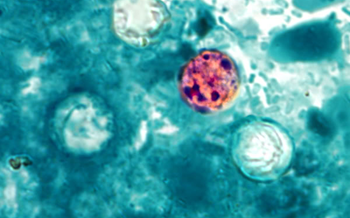
Cyclospora cayetanensis is a microscopic parasite that infects humans and causes an illness known as cyclosporiasis. Cyclospora cayetanensis originates from the feces of infected people and is transmitted when feces of infected people contaminate food or water.
How does Cyclospora cayetanensis spread?
People become infected by consuming food or water contaminated with Cyclospora cayetanensis.
How does food and water become contaminated with Cyclospora cayetanensis?
Contamination generally occurs when food or water comes into contact with human fecal material containing the parasite. Fresh produce is frequently implicated because it is often consumed raw and may be exposed to contaminated irrigation water, wash water or environmental sources during production.
Does cyclosporiasis spread from person-to-person?
Cyclosporiasis is not transmitted through direct person-to-person contact. Infected individuals shed oocysts (parasite eggs) in their feces; however, these oocysts must mature in the environment for approximately 1–2 weeks before they become infectious. Infection occurs through the consumption of food or water contaminated with Cyclospora cayetanensis.
What is the incubation time for Cyclosporiasis?
The incubation period averages one week (ranging as soon as 2 days – 2 weeks or more).
Why does Cyclospora appear at certain times of year?
Cyclosporiasis exhibits a strong seasonal pattern in the United States. CDC considers the primary Cyclospora season to run from May 1 through August 31, with cases typically peaking during the spring and summer months. While the exact reason for seasonality is not fully understood, environmental conditions that favor parasite survival, the seasonal availability of fresh produce, and agricultural practices are believed to play contributing roles.

Source: GenomicEpi.com, Cyclosporiasis Cases and Outbreaks
What do retailers need to do?
Cyclospora may be resistant to routine chemical disinfection methods such as those using chlorine. Retailers should continue to practice basic food safety, including good personal hygiene and frequent cleaning and sanitizing of food-contact surfaces and utensils.
Although person-to-person transmission is unlikely, employees experiencing vomiting or diarrhea should be managed according to the FDA Food Code and employee health policy. Food employees who are symptomatic with vomiting or diarrhea should be excluded from working in food establishments.
What can consumers do?
Produce is an important part of a healthy diet and consumers should follow safe handling practices when enjoying fresh fruits and vegetables at home.
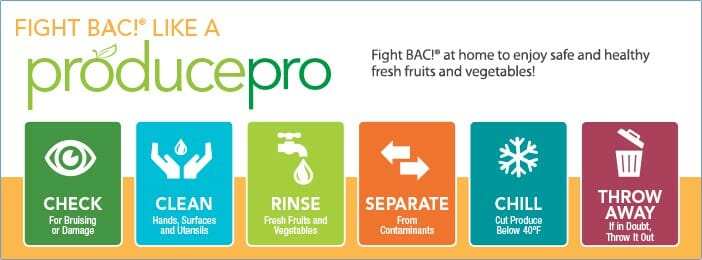
Additional information and resources for consumers can be found on the Partnership for Food Safety Education’s website.
Media Requests
For media requests, consider referring to your state health department and your state land grant university.
FMI Member Support
FMI's food and product safety team is actively monitoring federal and state developments and will continue sharing relevant updates with members as investigations evolve.
Questions and Support
FMI Food Safety Team
FoodSafetyTeam@fmi.org
Resources and References
CDC Surveillance of Cyclosporiasis
ECOLAB - Cyclospora Reminds Us Why Food Safety Never Takes a Day Off
MDHHS updates recommendations for cyclosporiasis prevention
What Is Cyclospora? FAQs from IFPA
AFDO Investigating Fresh Produce Cyclospora Outbreaks
Cyclosporiasis Cases and Outbreaks Tracker
IFPA Cyclospora technical bulletin
(FDA method has been updated since this was published, so there are fewer false positives)
NACMCF Report on Cyclospora cayetanensis in Produce
CONTACT Cyclospora Facts and What You Can Do Right Now
- Food Safety & Security
 Industry Topics address your specific area of expertise with resources, reports, events and more.
 Our Research covers consumer behavior and retail operation benchmarks so you can make informed business decisions.
 Events and Education including online and in-person help you advance your food retail career.
 Food Safety training, resources and guidance that help you create a company food safety culture.
 Government Affairs work — federal and state — on the latest food industry policy, regulatory and legislative issues.
 Get Involved. From industry awards to newsletters and committees, these resources help you take advantage of your membership.
 Best practices, guidance documents, infographics, signage and more for the food industry on the COVID-19 pandemic.
