Cybersecurity
Cybersecurity is essential for keeping operations seamless, safeguarding profitability, and building customer trust. In grocery retail, where margins are slim and processes are complex, clear, practical security measures are critical to success.

Why Cybersecurity is a Pre-competitive Priority for the Food Industry
The FMI Board of Directors declared cybersecurity a pre-competitive priority for the food industry, recognizing escalating cyber threats and the need for proactive, collaborative information sharing across supply chain partners.
Considerations for Cybersecurity Preparedness:
Building strong cybersecurity practices starts with teamwork and awareness. Establish an internal cross-functional cyber team to oversee strategy and response.
Stay informed through ongoing threat intelligence monitoring and foster a cyber-aware culture by training staff regularly.
During incidents, coordinate closely with IT to ensure swift action, and follow up with thorough post-incident debriefs to strengthen future resilience.
Cybersecurity Blog Posts


Policy Statement
Our current Board approved policy statement on this topic:

FMI Board Policy Statement on the Food Industry’s Cybersecurity Commitment
FMI's Board of Directors declares cybersecurity to be a pre-competitive priority for FMI and the industry as a whole.

FMI Cybersecurity Resources
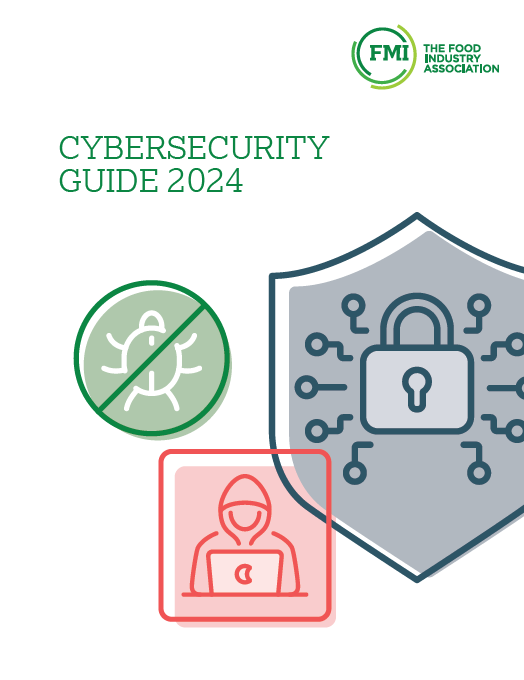
Cybersecurity Guide 2024

Leadership
FMI's Information Security Committee includes senior-level asset protection executives from food retailers and wholesalers who advise, guide and support our activities related to asset protection, loss prevention, crisis management, cybersecurity, risk management,
operations and safety.
Information Security Committee
 Industry Topics address your specific area of expertise with resources, reports, events and more.
 Our Research covers consumer behavior and retail operation benchmarks so you can make informed business decisions.
 Events and Education including online and in-person help you advance your food retail career.
 Food Safety training, resources and guidance that help you create a company food safety culture.
 Government Affairs work — federal and state — on the latest food industry policy, regulatory and legislative issues.
 Get Involved. From industry awards to newsletters and committees, these resources help you take advantage of your membership.
 Best practices, guidance documents, infographics, signage and more for the food industry on the COVID-19 pandemic.
© FMI All rights reserved.
Website design by Matrix Group International, Inc. ®
