
Created during the Great Depression, the supermarket first delivered self-service and low prices, then boundless variety, healthy fresh foods, one-stop shopping, convenient prepared foods, and now gourmet, ethnic and organic offerings. Today the supermarket endures as a concept more than a single format. Whether consumers are shopping at a conventional supermarket, combination food-pharmacy store, a supercenter or a warehouse outlet, the business model remains the same: affordable prices, vast variety, abundant fresh foods and convenience.
The first supermarket was a King Kullen store that opened August 4, 1930, in Queens, NY. This store, comparable to today’s no-frills warehouse outlets, served as the catalyst for a new age in food retailing, selling more than 1,000 products. Other companies pioneering the supermarket concept in 1930 were Ralphs Grocery Company in California, the Texas-based Weingarten’s Big Food Markets and Henke & Pillot, which was purchased by The Kroger Co. in 1956.
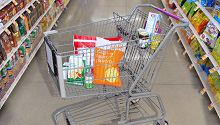
Key to the early success of the supermarket were the shopping cart, introduced in 1937, the automobile, free parking lots and mechanical refrigerators in the home and store.
Among its contributions over the past 75 years, the supermarket helped America:
- Endure The Great Depression: The supermarket emerged while America was grappling with the Great Depression. The impoverished American public welcomed the unprecedented low prices, boundless variety and the opportunity to select products directly from shelves. This innovation became an immediate success.
- Create the Middle Class: The supermarket’s low prices freed up substantial funds for families to spend on cars, homes, education and other needs and amenities of life. As supermarkets proliferated in the 1950s and 1960s, they played a pivotal role in creating the American middle class. On the supermarket’s silver anniversary, President Kennedy said that the supermarket’s low-cost mass marketing techniques “… have enabled a higher standard of living and have contributed importantly to our economic growth.”
- End the Cold War: Between 1958 and 1988, some 50,000 Soviet citizens traveled to the U.S., most touring an American supermarket on their trip. The supermarket showcased how a free-market economy could deliver abundant, affordable food and became a metaphor for what capitalism could do and Communism could not. In his autobiography, Boris Yeltsin gave this account of his 1989 visit to a supermarket in Houston: “When I saw those shelves crammed with hundreds, thousands of cans, cartons, and goods of every possible sort, for the first time I felt quite frankly sick with despair for the Soviet people. That such a potentially super-rich country as ours has been brought to a state of such poverty! It is terrible to think of it.”
- Lower Food Costs: The cost of food today is nearly 6 percent of disposable U.S. family income — the lowest of any country in the world — and down from 21 percent in 1930 and 50 percent in the 19th century.
- Enjoy Abundant Variety: The corner grocery store of the 1920s carried about 700 items, most sold in bulk, and consumers had to shop elsewhere for meat, produce, baked goods, dairy products and other items. The supermarket brought all these products under one roof. The number of products carried climbed to 6,000 by 1960 to 14,000 by 1980 and to more than 30,000 today.
- Experience One-Stop Convenience: Even the first stores featured health and beauty care items, electrical supplies, auto accessories and lunch counters. Today the offerings include prescription drugs, flowers, magazines, greeting cards, photo developing, banking and other services, along with a growing assortment of ready-to-eat and -heat foods.
- Pioneer New Technologies: Supermarkets have led implementation of technologies designed to improve efficiency and customer service, most notably the bar code — now scanned more than 5 billion times a day worldwide. Recent innovations such as self-scanning, online ordering, radio frequency identification, biometric payment systems and computerized shopping carts are enhancing the shopping experience from the home to the aisles to the checkout.
- Promote Personal Health and Well-Being: By offering a host of fresh, nutritious foods — including year-round produce — supermarkets have become a premiere source of whole health solutions and resources. Supermarkets now employ nutrition professionals to help customers prevent illnesses and manage chronic diseases through healthy diets. Stores also bring in nurses to check blood pressure, bone density and cholesterol levels.
- Serve Communities: American supermarkets serve their communities with compassion, supporting food banks, schools and other vital institutions. In the times of greatest need, such as the hurricanes that swept Florida in 2004 and the 9/11 terrorism disasters, supermarkets are among the first businesses to reopen, dispensing water, medical supplies, batteries and other essentials.
As the country commemorates the supermarket’s 75th birthday, consumers may want to pause the next time they walk the aisles of their favorite store. The boundless variety, the low cost, the brand quality, the abundant fresh foods, the one-stop convenience — are all part of this ever-changing economic miracle that touches every American family every day.
For more details, please visit the Food Marketing Institute Web site at www.fmi.org.
 Industry Topics address your specific area of expertise with resources, reports, events and more.
 Our Research covers consumer behavior and retail operation benchmarks so you can make informed business decisions.
 Events and Education including online and in-person help you advance your food retail career.
 Food Safety training, resources and guidance that help you create a company food safety culture.
 Government Affairs work — federal and state — on the latest food industry policy, regulatory and legislative issues.
 Get Involved. From industry awards to newsletters and committees, these resources help you take advantage of your membership.
 Best practices, guidance documents, infographics, signage and more for the food industry on the COVID-19 pandemic.
