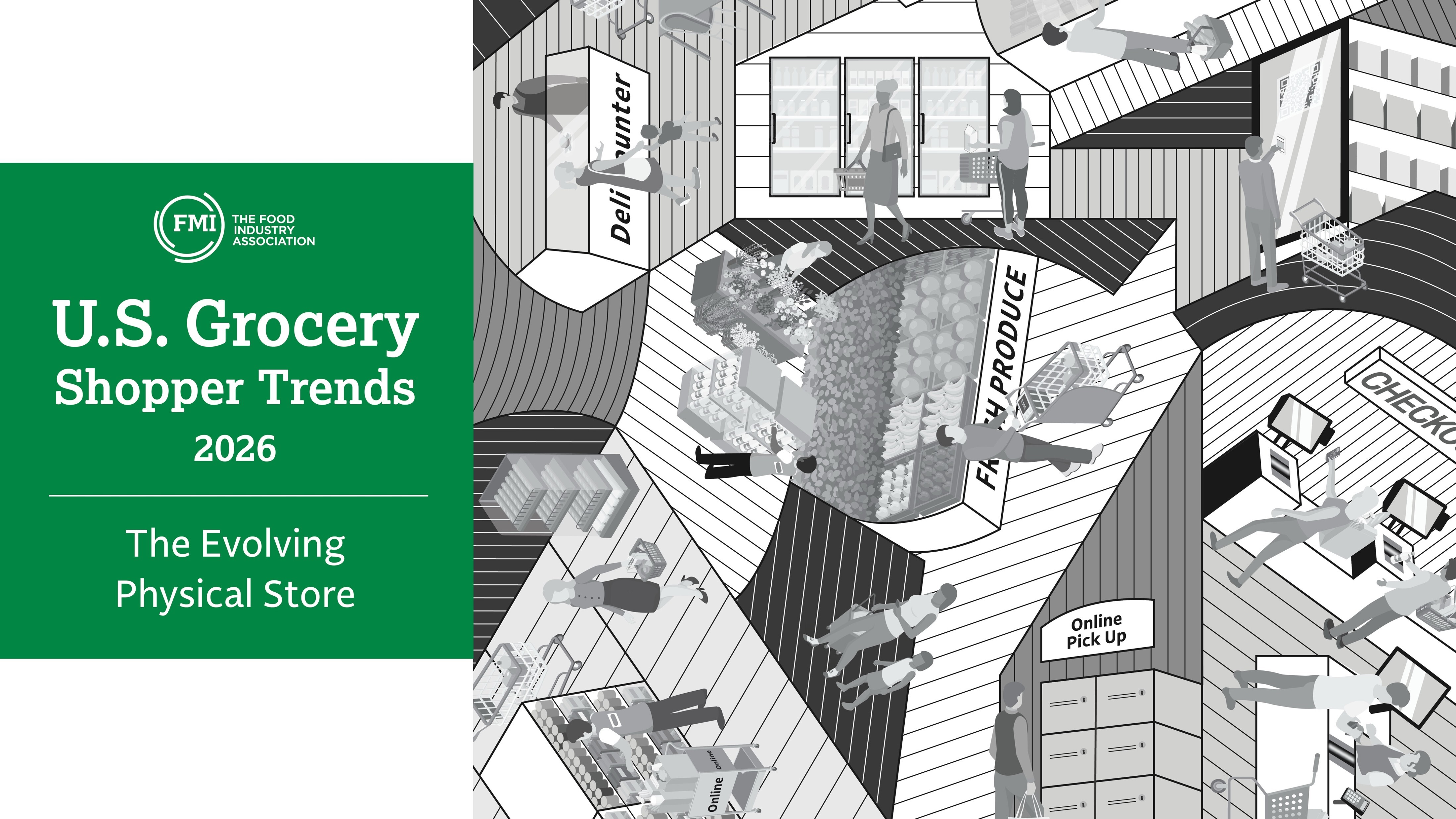
Our latest U.S. Grocery Shopper Trends: New Routines report reveals that parents remain highly price-conscious yet committed to creating nutritious, enjoyable meals, making grocery shopping both a challenge and a labor of love.
By: Steve Markenson, Vice President, Research & Insights, FMI

Today, as I sit in my home office, I look out the window and see all the neighborhood kids heading to the school bus stop at the corner, some with their lunches in hand. It takes me back to the days when my wife and I would team up to make lunches for our three boys. They are all grown now and have "flown from the nest." Based on what I've learned from our just-released U.S. Grocery Shopper Trends New Routines report, I am both relieved and nostalgic to be past that phase of my life!
Most kids (75%) bring lunches from home every day or at least some days. The top reasons parents cite for providing lunches from home are:
- They are healthier
- Their child prefers the taste
- They are more convenient
Meanwhile, many kids (57%) will partake in school-provided lunches every day or at least some days. Convenience and cost were the top reasons for choosing the school-provided lunch route.
How much does school lunch cost?
The costs of a school lunch can be hard to pin down, because there are many school districts across the country that offer universal free school lunches, and others offer free or discounted lunches to some students. Based on the recently released 2025 Deloitte Back-to-School Survey, the national average for those having to pay for a school lunch this year is $2.99. This is less than half the average daily cost for a lunch made at home - $6.15.
For parents, who are more concerned than most Americans are about food prices, that $3 to $6.15 a day per child can add up quickly. I do not envy today's parents who strive to provide their families with healthy, nutritious and tasty experiences while operating within time and budgetary limits.
What do parents think about grocery shopping?
We learned a lot in this research about the trials and tribulations, along with the joys, of being a parent today.
- Parents remain much more concerned than others about retail food prices (73% extremely or very concerned, compared to 66% overall), but are also more confident than others about managing their food expenses.
- Parents are much more likely than other shoppers to worry about prices in all expense areas — a gap that has widened from February as parents' worries have not fallen.
- More than others, parents seek convenient solutions and pursue deliberate shopping strategies.
- Parents place much higher importance on eating at home as a household (77% extremely or very important), and they are also the primary driver of weekly dish traditions (70% have at least one).
- Parents pay extra attention to health, nutrition, social and culinary appeal, and diversity aspects of meals within strict constraints of time and budget.
- Ultimately, shopping is a labor of love for parents, reflected in a Shopper Sentiment Index of 78 — the highest of any group — likely because they undertake the task in support of their growing families.

Learn more about how parents, and us empty nesters, are navigating the current food environment by downloading the latest U.S. Grocery Shopper Trends report.
 Industry Topics address your specific area of expertise with resources, reports, events and more.
 Our Research covers consumer behavior and retail operation benchmarks so you can make informed business decisions.
 Events and Education including online and in-person help you advance your food retail career.
 Food Safety training, resources and guidance that help you create a company food safety culture.
 Government Affairs work — federal and state — on the latest food industry policy, regulatory and legislative issues.
 Get Involved. From industry awards to newsletters and committees, these resources help you take advantage of your membership.
 Best practices, guidance documents, infographics, signage and more for the food industry on the COVID-19 pandemic.
